
What are Core Words for AAC?
Okay teacher friends…you may have heard the term “core words” a lot within the last few years in special education and speech therapy.
Core words are simple core vocabulary words that make up about 80% of the words that we use in daily communication. We use this term a lot in special education or speech therapy when we are specifically talking about students that use alternative or augmentative communication (AAC).
This might mean that students use aac devices, aac apps or a communication board to communicate effectively because they have limited verbal speaking skills.
The big question that I see and get from other special education teachers is “how do I teach AAC core words in my severe special education classroom?”
I want to share what works for me and how I teach core words in hopes to help other special educators feel confident in doing in!

Core Words vs. Fringe Words
In our natural speech, we have both core words and fringe words. Let’s look at the difference between the two.
Examples of Core Words
As I said above, core words make up about 80% of our everyday language. These are common words such as:
- no
- more
- help
- stop
- want
- yes
- no
- in
- where
- open
Examples of Fringe Words
Fringe vocabulary are words that are more specific to a certain situation and are typically nouns. You cannot form a sentence with only fringe words; you must have a combination of both core and fringe words.
Some examples of fringe vocabulary words might be:
- eat
- know
- cheese
- yogurt
How Do You Teach Core Words?
The English language is a robust language system. We have to teach practical AAC to our AAC learners so that they have the proper skills that they need to communicate with those around them.
The ideas below will help give you a starting place when teaching core words. My best advice would be to start with one tip until you get comfortable and then you can rotate other ideas in. Consistency with teaching core words is key!
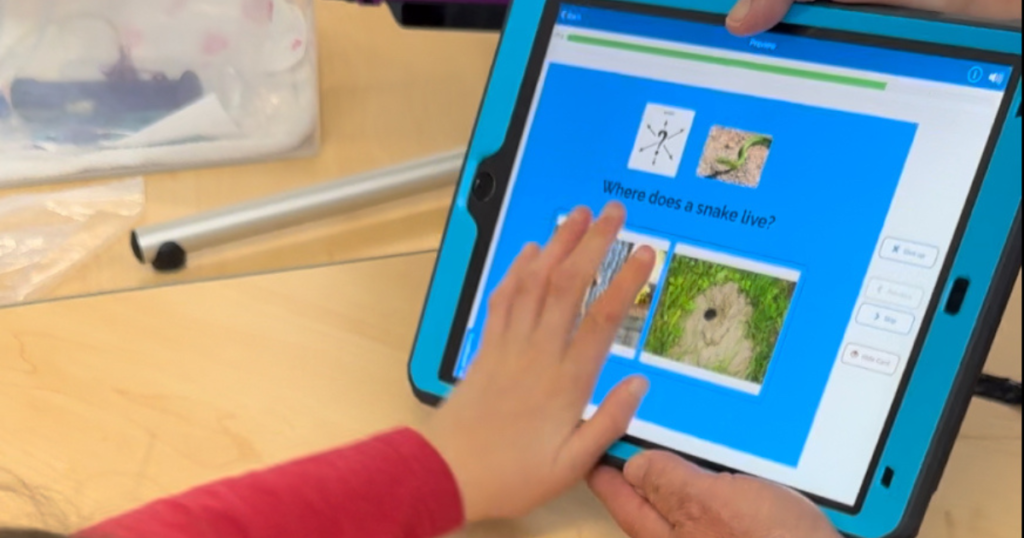
1. Start by Teaching Words that the Child is Interested In
Simply put, start by teaching everyday language that motivates a student. This is how you will gain interest or “buy-in” from them to participate in an AAC communication system. Start keeping word lists and teach a new core word of the week.
What do I mean by this exactly?
If you have a student that loves to eat crackers, two words that you might want to focus on first are “eat” and “more.”
When you focus on words that motivate the student, they will be more willing to gain interest.
You can focus on the word more during snack and lunch time and encourage them to communicate the word to you in order to get what they want- i.e.- more crackers.
You can use AAC Adapted Books for teaching one core vocabulary word at a time or simply create your own core word lessons.
Make sure you plan fun activities to teach the core word vocabulary and engage your students!
GRAB AAC ADAPTED BOOKS HERE!

Identify Their Top 50 Core Words
I would highly suggest using this list of Core Vocabulary Words for AAC and identify the student’s top 50 words before introducing any new words to them. This will help give them a strong base to start with and not cause overwhelm.
2. Use a Core Word Board
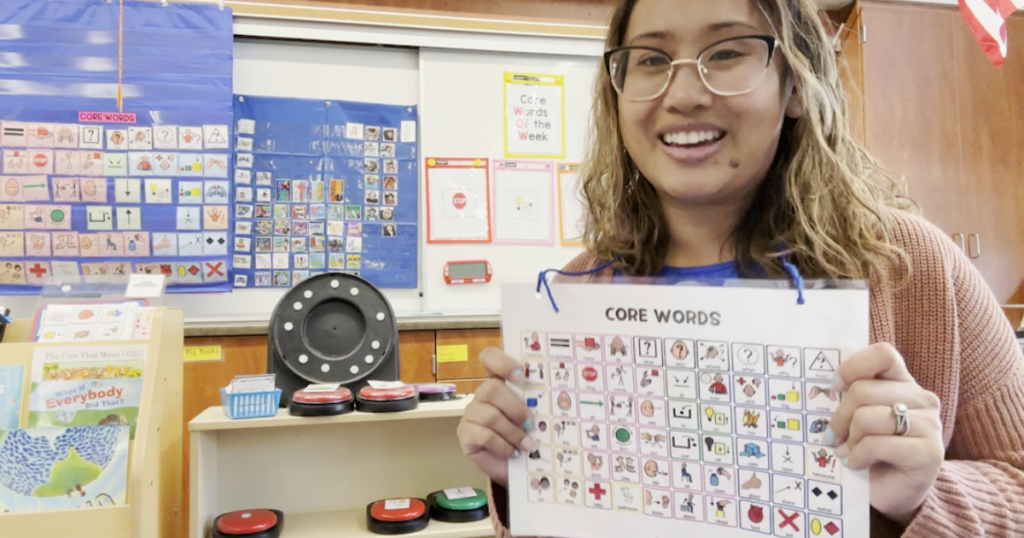
Using a Core Word Board in your classroom is another great way to start introducing core words to your students with severe disabilities and language impairments.
A Core Word Board gives students the access to a visual language environment. It is usually a piece of foam board with the core words and AAC picture symbols on it. It could also look be a laminated sheet of paper hung up around the room. The bigger the better generally, so that students can see it clearly and use it clearly by touching the word that they want to communicate.
Here is an example of one that I use in my room:
3. Use AAC Communication Books
Helping students communicate their first words is one of the most precious tools that you can give them!
The AAC communication book is perfect to facilitate speech development for students who are non-speaking or have limited verbal skills. It will help give your students a form of communication to start advocating for themselves.
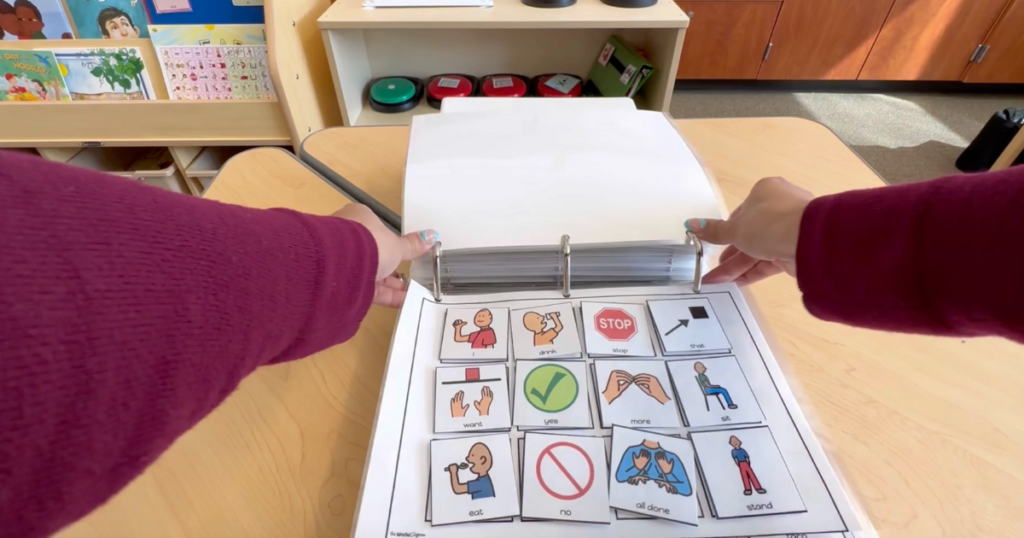
The AAC Communication Book has over 800 picture symbols for students to use to communicate. A student could use it either in the classroom or at home because it has topics boards in it for both areas.
AAC users can use it for topics at school such as:
- the alphabet
- greeting others
- lunch time in the cafeteria
- recess with peers
- ELA and math
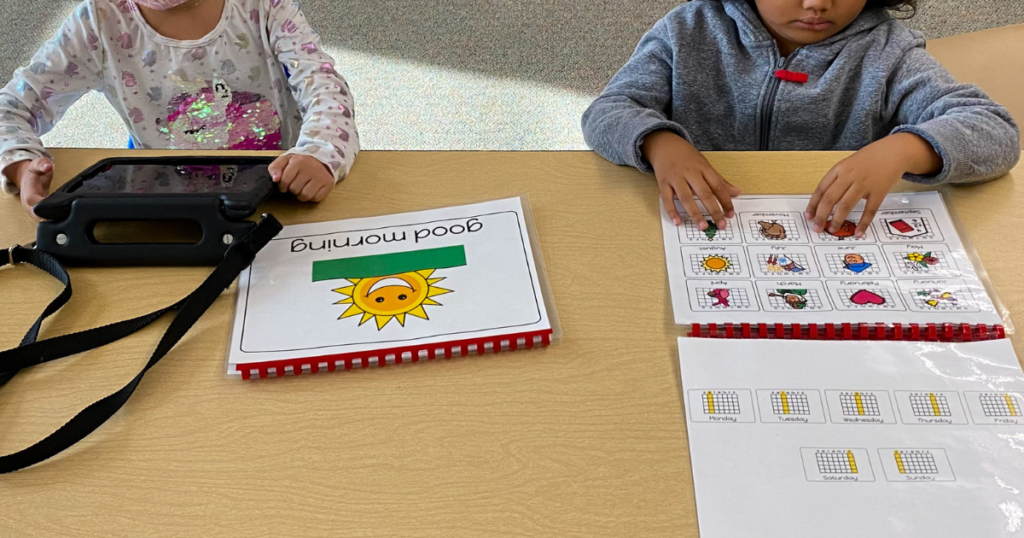
They could also use it for topics in their home setting such as:
- hygiene routines
- helping with the dishes
- their morning and evening routine
- any vocabulary related to the holidays
4. Give Frequent Opportunities to Practice Core Language
The number one thing that I do to teach core words using AAC in my severe needs special education classroom is to give a lot of opportunities for practice.
These complex communication needs are a huge life skill for students in special education. Once you introduce a core word, you need to be using it in as many different environments as possible.
This might look like practicing the word “go” during PE class or at recess time with a paraprofessional. The more that the student practices the meaning of the word, the more they will understand how to use and incorporate it into their daily language skills.
Check out 10 fun AAC activities to try with your students!
5. Use AAC Book Companions
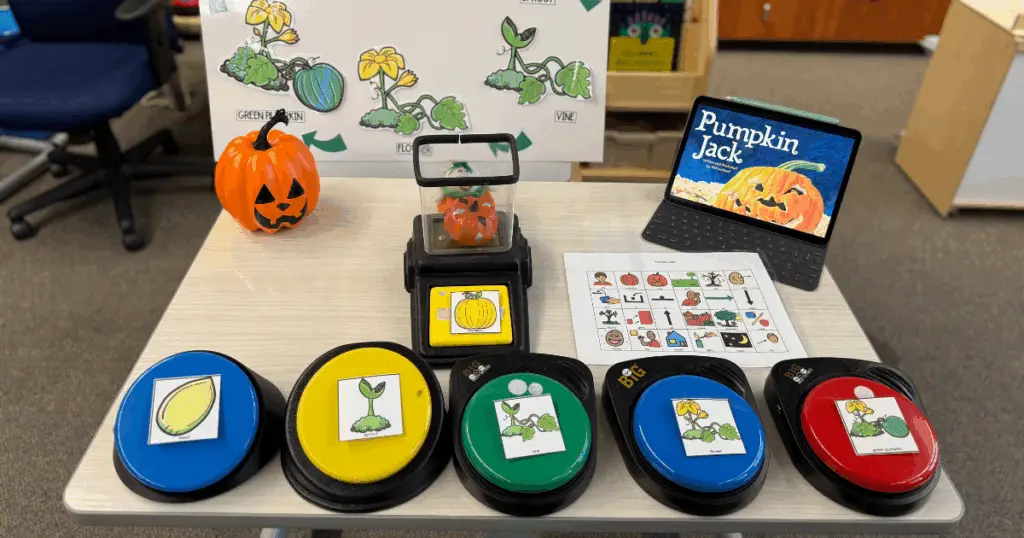
Another way to teach core words is through reading physical books. Find stories that have the core word you are focusing on as one of the target words in the story. You can adapt the books so that all students can participate during reading, whether it’s during a whole class lesson or small group time.
This is the reason why I started created AAC book companions for my special education classroom.
These book companions add picture supports that make it ideal for a student who is non-speaking or uses an AAC device to communicate.
Practical AAC
I hope this helps give you a good starting place when teaching core words to your AAC users! I teach core words everyday in my severe needs special education classroom.
Remember: the point of teaching core words is so that students who can’t communicate with their voice clearly have a way to communicate and get across their needs and wants. It is our job as special educators to help them advocate for themselves.
Happy teaching!